
Danger Idioms in English: Cost a Bomb, Play with Fire

Taught by Tom Wilkinson — Cambridge CELTA
Recorded and taught by a team of British and North American English teachers, based in Oxford (UK) and Barcelona (Spain).
In this episode: Katie describes ten colloquial expressions about danger and safety and Tom guesses them, from playing it safe to a bombshell that ends up costing a bomb.
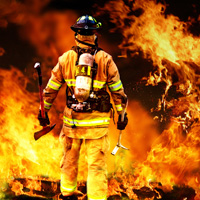 Halfway through explaining why it's better to leave early, Katie is interrupted by the birds. One of the hosts is recording outdoors and breaks off to complain about "very noisy parrots" — "My ears hurt." We kept it in, because that's what real conversation sounds like. Around the parrots, we work through ten colloquial expressions built on words like safe, bomb, fire and serious — one speaker describing, the other guessing, exactly as we always do it.
What you'll hear in this episode
Katie sets up a guessing game and Tom has to find the phrase from her description. The first three all contain the word safe and all mean the same thing: don't take chances. She gives the situation — an important appointment at two o'clock, so you set off very early — and Tom supplies to play it safe, then to be on the safe side, then better safe than sorry.
From there we move to things that explode. Katie asks for an expression with bomb that means telling someone shocking news, and then tests it with a fake announcement: "Hello Thomas, I’m pregnant..." Tom's reaction is immediate, and Katie has to add, "It’s not true, I must tell you, but that would be a bombshell." The second bomb phrase is about price. Asked whether he's ever bought anything expensive, one of the hosts nods at "the iPad that you’re holding there" — which leads straight to "And I would break it."
The second conversation covers to play with fire, serious money, get serious, search me and to blow up in your face. Tom demonstrates get serious by turning it on his co-host: "Oh get serious Katie! You’re talking a load of rubbish." For blow up in your face, one of the speakers offers the example of introducing two friends for a date, only for them to have a massive argument.
Quick facts
| Episode | Colloquial 2.5 – Danger |
| Pack | Colloquial 2 |
| Level | 2 |
| Duration | 17 minutes 11 seconds |
| Speakers | Katie and Tom |
| Format | Two unscripted conversations plus two meaning and pronunciation tasks |
| Workbook | Included in the all-in-one pack |
What you'll learn
Ten expressions, and something more useful than a list: how a native speaker actually arrives at an idiom. Katie rarely gives the phrase. She gives the situation and the first word — "To be on...", "Better...", "To play...with..." — and you hear the ending appear. That's a very good way to build the reflex you need in conversation, where you have to finish a fixed phrase at speed rather than translate it.
You'll also notice how flexible these phrases are in real use. Tom says something "costs an absolute bomb", slipping an intensifier inside the idiom. He offers both "drop a bomb" and "drop a bombshell". Katie reworks better safe than sorry into "Better to be safe than sorry!" at the end of the first conversation — a small reminder that the workbook form isn't the only form you'll hear.
The two meaning and pronunciation tasks come after each conversation. You're prompted with the first word or two, you answer if you can, then you repeat after the beep with a model sentence: We should leave an hour early to be on the safe side, Designer clothes cost a bomb, He’s got serious money. Short, spoken, and closer to how these phrases occur than any written definition.
The expressions, with the workbook definitions
- to be on the safe side – to be careful, to not take any chances or risks
- to play it safe – to be careful, to not take any chances or risks
- better safe than sorry – it is a better idea to be careful than to take a chance / risk and lose something or have something bad happen
- to drop a bombshell – to give some very shocking information which surprises people
- to cost a bomb – to be very expensive
- to blow up in your face – to go wrong, to happen in a bad and opposite way to what you thought would happen
- search me – I don’t know, I have no idea
- serious money – a lot of money, not a small amount
- get serious – don’t be crazy, shows that the speaker thinks you are being silly because there is no way something will happen
- to play with fire – to put yourself in a dangerous situation or take a big chance / risk
In the workbook
The workbook for this unit carries the full transcript of both English conversations, so you can go back and check anything the parrots covered up. The glossary gives all ten expressions with definitions and an informality rating from 1 to 3, where 1 is safe with almost anyone and 3 comes with the warning: don't use this with your mother-in-law. Search me and get serious are marked 2 — fine with people you know well.
Then two written exercises. Practice Exercise 1 asks you to correct mistakes in six sentences, and the mistakes are the ones learners genuinely make: He is playing fire, to be in the safe side, The whole situation blew down in my face, Mike threw a bombshell. Practice Exercise 2 scrambles five sentences so that each phrase in bold has landed in the wrong one, and you put them back. Full answers are included.
This workbook is part of the Zapp! English all-in-one pack — every episode, every transcript, every exercise, for €39.
Get the complete courseAll workbooks and audio — €39
Is the audio scripted?
The conversations between Katie and Tom are unscripted — the guessing is real, and so are the interruptions. The teaching sections that set up the tasks and give the answers are scripted, so the instructions stay clear.
What level is this episode?
Level 2 of the Colloquial series. You'll get most from it if you can already follow two people talking at natural speed.
Why is a bomb connected to money?
Because cost a bomb means very expensive, and it has nothing to do with explosions beyond the sense of something enormous. Tom's version in the recording is "Costs an absolute bomb."
Do I need the workbook to follow the audio?
No — the audio works alone. The workbook is where the written practice and the informality ratings live, which matter with phrases like these.
How long is it?
17 minutes 11 seconds, in two conversation and drill halves.
Get this episode
To save the audio, right-click the MP3 link and choose Save link as.
Listen on

