
House and Home Idioms in English: On the House (Audio)

Taught by Tom Wilkinson — Cambridge CELTA
Recorded and taught by a team of British and North American English teachers, based in Oxford (UK) and Barcelona (Spain).
In this episode: Katie quizzes Tom on house and home expressions: a dump, a squat, to do up, on the house and to house-sit, in 21 minutes of unscripted English.
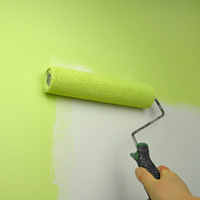 Katie describes a place that's old, dirty and thoroughly unpleasant, and asks Tom for the word. His first guess is far too rude to print, so Katie steers him: "slightly more polite. Begins with d." Out comes a dump — and Tom immediately explains why the image works, since a dump is where you throw your rubbish. That's how this whole episode runs: Katie describes, Tom guesses, and the two of them talk their way round ten colloquial expressions built on the words house and home.
What you'll hear in this episode
The episode is built from two unscripted conversations between Katie and Tom, each followed by a teaching task. In the first, Katie sets up definitions and Tom supplies the words: a dump, a squat, to be in or out, to do up and a home from home.
The squat section turns into a proper conversation. One of the hosts remembers London squat parties — doors open, club music, "quite wild, quite crazy places sometimes" — before Tom raises the other side of the argument: if properties stand empty for years while people sleep in the streets in a city as cold as London, "don't they have the right to squat?"
The second conversation covers to crash at someone's house, to put someone up, to house-sit, on the house and to get on like a house on fire. The best moment is Tom losing house-sit completely: "I can't remember, my brain has gone blank." Katie gives him the smallest possible clue — "What do you do on a chair?" — and gets "Ah house-sit!" Tom then admits what he'd really like: "I've always dreamed of somebody asking me to house-sit a...a palace somewhere by the sea." They test the pattern too — babysit, dog-sit, and then Tom's "Did you plant sit?", which Katie rules out. On on the house, Tom offers the origin: "Well that comes from it being called a public house."
Quick facts
| Episode | Zapp! English Colloquial 2.13 - Around the Home |
| Episode number | 2.13 |
| Pack | Colloquial 2 |
| Level | 2 |
| Duration | 21 minutes 11 seconds |
| Audio | Free |
| Workbook | Included in the all-in-one pack (€39) |
What you'll learn
Because the conversations are set up as a guessing game, you always hear the meaning before the expression. Katie explains what she means in ordinary words — a house that needs painting, new kitchen cupboards, repairs — and only then does Tom produce to do up. That's excellent training in listening for definition, the skill you need when a native speaker explains an unfamiliar word to you in real time.
You'll also hear the grammar of these phrases in action rather than in a table. Tom says put you up, then generalises to put someone up; the teaching tasks give you it needs doing up and they bought an old house and did it up, so you can hear where the object goes. And you'll notice that collocation matters: house-sit and dog-sit are fine, plant sit is not.
The episode is honest about register, too. The workbook glossary grades each expression from 1 to 3 for informality, so you know that a dump and to crash at someone's house (both level 2) belong with friends, while on the house and to get on like a house on fire are safe almost anywhere. Tom calls the last one "a great expression" and says you do hear it a lot — it means, in his words, "best best friends".
The expressions in full
- a dump (2) – a very dirty place, that is not nice to be in and isn't cared for. Katie's example: an apartment viewing that goes badly.
- a squat (1) – a building that was closed, that people have moved into to live, but without the owner telling them it's OK, and without paying rent.
- to be in / out (1) – to be at home / not at home. Katie acts out the doorbell: ding-dong, nothing.
- to do up (1) – to repair a house and make it better, more modern and nicer, especially one that is old or in bad condition.
- a home from home (1) – a place where you feel as relaxed and happy as you do in your own home. One of the hosts says, "I have several home from homes now I think" — and admits to sometimes being confused about which home to be in.
- to crash at someone's house (2) – to stay the night without planning it.
- to put someone up (1) – to let someone stay at your house.
- on the house (1) – free; the pub or restaurant will not ask you to pay.
- to get on like a house on fire (1) – to be very good friends, to have a very good relationship.
- to house-sit (1) – to stay in and look after someone's house while they are away.
In the workbook
The workbook for this episode comes with the all-in-one pack. It contains the full transcript of both conversations, so you can check every hesitation and false start against what you heard, plus the graded glossary above with its 1–3 informality warnings — including the reminder not to use level 3 language with your mother-in-law.
There are also the scripts for both Meaning and Pronunciation tasks, where you answer a question and then repeat the model phrase after the beep, and two written exercises: Practice Exercise 1, where the bold expressions have been swapped into the wrong sentences and you put them back (Can I house-sit at your house tonight? needs fixing), and Practice Exercise 2, seven jumbled sentences to reorder — in / there / Is / anybody / ? and the / on / This / one's / house among them. Full answers are printed at the back.
The pack gives you every Zapp! English workbook, for all levels and all shows, in one download.
Get the complete courseAll workbooks and audio — €39
Questions learners ask
Is the audio scripted?
The conversations between Katie and Tom are unscripted — that's why Tom's brain goes blank halfway through. The teaching sections that set up the tasks and give the answers are scripted, so the instructions stay clear.
What level is this episode?
It's Level 2, from the Colloquial 2 pack. The expressions are everyday informal English rather than advanced vocabulary, but the speech is fast and full of interruptions.
How long is it, and does it cost anything?
21 minutes 11 seconds, and the audio is free. The workbook is part of the €39 all-in-one pack.
Can I use all of these with anyone?
Check the number after each entry in the glossary. Level 1 expressions are safe in most situations; a dump and to crash at someone's house are level 2 and belong with people you know well.
Do I need the workbook to follow the audio?
No, but the transcript and the two practice exercises are where the expressions actually stick.
Get this episode
To save the audio, right-click the MP3 link and choose Save link as.
Listen on

